Tracing Software Partnerships That Shape No-Deposit Spin Mechanics Across Live Dealer Mobile Sessions
Sage Müller · Aug 9, 2026

Tracing Software Partnerships That Shape No-Deposit Spin Mechanics Across Live Dealer Mobile Sessions
Software partnerships have expanded the technical foundations that support no-deposit spin mechanics inside live dealer environments on mobile devices, and these collaborations continue to define how bonus features integrate with real-time table streams. Data from industry reports show that mobile live dealer sessions accounted for a growing share of operator traffic through 2025 and into August 2026, when several providers released updated APIs that streamlined the delivery of zero-stake spins during blackjack and roulette broadcasts. Observers note that companies such as Evolution Gaming and Playtech have formed joint development agreements with payment and loyalty platforms, which in turn allow operators to trigger no-deposit rounds without interrupting the live video feed.
Core Technical Integrations
Partnerships between game studios and mobile infrastructure providers create the backend systems that verify player eligibility and credit spins in real time, while operators maintain compliance with regional licensing frameworks. Research indicates that these alliances often center on shared ledger technology and secure token exchange protocols, which reduce latency during high-volume live sessions. One study revealed that average session lengths increased when no-deposit mechanics activated mid-game, because players remained connected to the dealer stream rather than navigating separate bonus menus. Those who've examined the codebases point to modular plug-ins that let studios embed spin triggers directly into the live dealer client without requiring full application updates.
Regional Regulatory Influences
Regulatory bodies outside the United Kingdom have shaped how these partnerships structure their offerings, and the Malta Gaming Authority has published guidelines that address the timing of bonus activation during live streams. Figures from the American Gaming Association reveal that U.S. states permitting mobile casino play reported a 22 percent rise in live dealer handle during the first half of 2026, coinciding with new partnership announcements between software vendors and state-licensed operators. Australian Communications and Media Authority data similarly document increased mobile engagement in jurisdictions where no-deposit mechanics received explicit approval under updated digital gaming codes. Partnerships therefore adapt their feature sets to satisfy multiple licensing regimes while preserving the seamless flow of live dealer content.
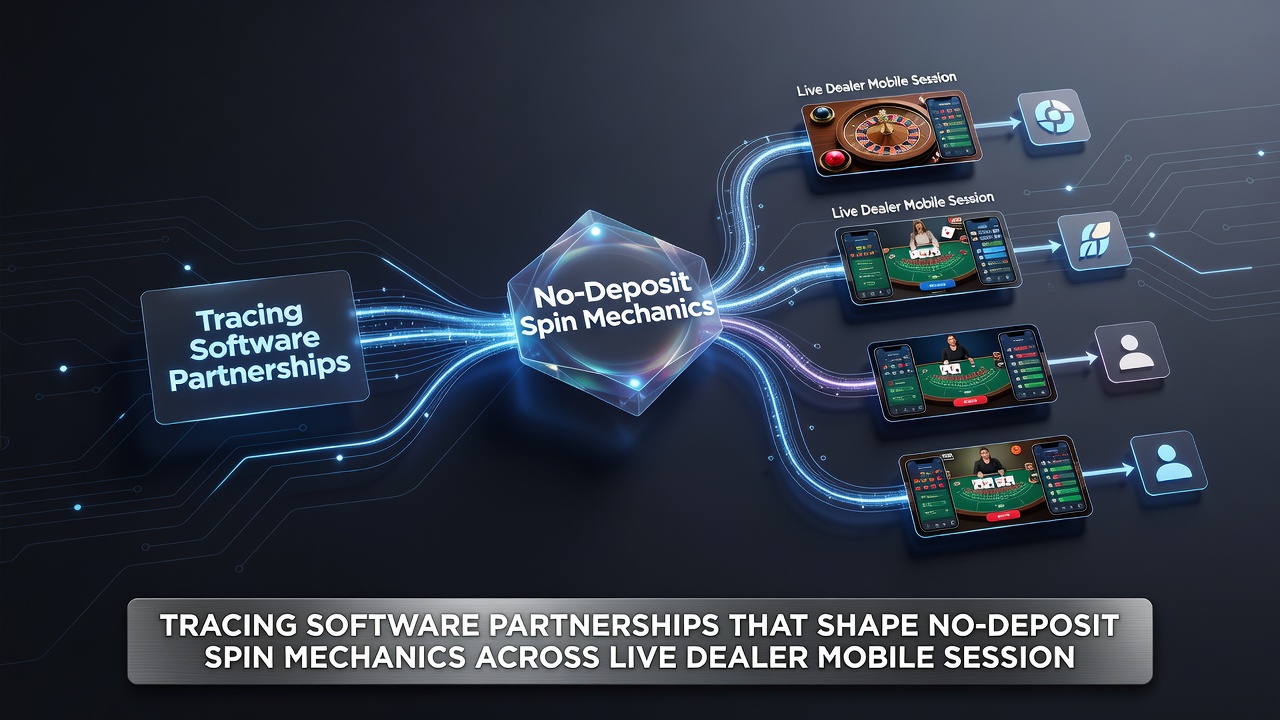
Engineers at several studios have documented how these integrations rely on standardized event listeners that listen for dealer actions and then overlay spin opportunities without altering the primary video pipeline. The result appears in sessions where a player receives a no-deposit spin immediately after a roulette wheel spin concludes, maintaining visual continuity. Data shows that such timing reduces drop-off rates compared with earlier implementations that required players to exit the live table. Partnerships with cloud rendering services have further enabled higher frame-rate delivery on mid-range handsets, which broadens the addressable market for these mechanics.
Case Examples of Collaboration
Take one documented alliance between a major slot developer and a live casino specialist that produced a unified bonus engine capable of converting slot-based no-deposit awards into live table credits. The integration went live across multiple operators in early 2026 and required coordinated updates to both the slot math engine and the live dealer random number generator interface. Researchers discovered that the combined system maintained separate audit trails for each component, satisfying the transparency requirements of several international regulators. Another partnership between a mobile wallet provider and a game aggregator introduced instant verification tokens that activate no-deposit spins the moment a player enters a live blackjack lobby, eliminating the previous multi-step authentication flow.
Academic papers from gaming technology conferences have examined the latency metrics of these hybrid systems, and the findings indicate average response times under 300 milliseconds when the partnerships employ edge-computing nodes near major population centers. Observers note that such performance levels support the perception of instantaneous bonus delivery, which in turn sustains player attention across extended live dealer sequences. Partnerships continue to iterate on these architectures as handset processors improve and 5G coverage expands in additional markets.
Future Development Paths
Industry roadmaps released in August 2026 outline plans for deeper cross-platform linkages that would allow no-deposit spin mechanics to carry across from live dealer tables into connected slot lobbies within the same mobile application. These initiatives depend on continued cooperation between graphics rendering teams, compliance officers, and payment processors to ensure that each element meets the security and fairness standards required by licensing authorities. Data from multiple operator dashboards suggest that sessions incorporating these unified mechanics generate higher repeat-visit rates, although the precise contribution of any single partnership remains difficult to isolate without controlled testing environments.
Conclusion
Software partnerships have established the technical and operational frameworks that deliver no-deposit spin mechanics inside live dealer mobile sessions, and ongoing collaboration among studios, regulators, and infrastructure providers shapes the pace of further refinement. Records from licensing bodies and performance metrics from deployed systems confirm that these alliances directly influence how players experience bonus features without disrupting the core live dealer interaction. Continued monitoring of partnership announcements and technical releases will reveal the next layer of integration that extends these mechanics across additional game formats and device types.