Software Foundations Supporting Instant Shifts from Slots to Live Dealer Tables Within Gaming Applications
Sage Müller · Jul 12, 2026
Software Foundations Supporting Instant Shifts from Slots to Live Dealer Tables Within Gaming Applications
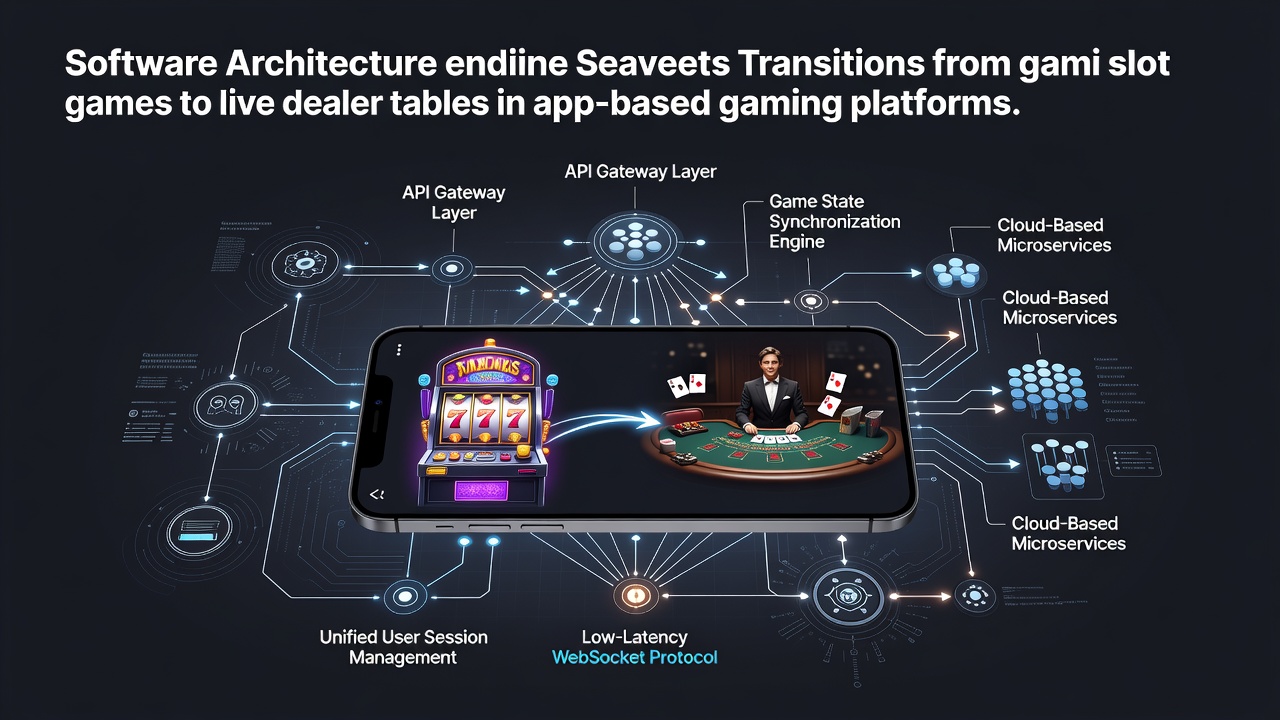
Modern app-based gaming platforms rely on modular architectures that let players move between random number generator slots and live dealer tables without reloading interfaces or losing session data. These systems combine backend services, real-time communication protocols, and synchronized front-end components to maintain continuity across game types.
Core Architecture Layers
Developers structure these platforms around microservices that separate concerns for slot mechanics, live video feeds, payment handling, and user state management. Each service communicates through APIs that expose standardized endpoints for balance updates, game results, and player actions. A central orchestration layer coordinates requests so that a slot spin outcome can feed directly into a live table buy-in without separate authentication steps.
Real-time data pipelines use WebSocket connections alongside message brokers such as Kafka to stream events from both slot servers and live dealer studios. When a player initiates a transition, the system preserves variables like current bet size, active promotions, and account balance across the switch. Container orchestration tools including Kubernetes allow individual services to scale independently during peak hours when live table traffic spikes.
Session Persistence and State Synchronization
Persistent session tokens store player context in distributed caches so that moving from a five-reel slot to a roulette wheel requires no additional login. State machines track game phases and trigger appropriate UI updates on the client side. Research from the University of Nevada Las Vegas International Gaming Institute shows that such designs reduce average transition latency to under two seconds in tested environments.
Database schemas employ both relational tables for transactional records and document stores for flexible game metadata. When a player exits a slot session, the system serializes relevant objects and pushes them to the live table service via internal queues. This approach avoids data loss even if network interruptions occur midway through the changeover.
Integration of RNG and Live Video Streams
Slot engines generate outcomes through certified random number generators that operate independently of live dealer modules. Yet the architecture bridges these worlds by exposing unified result objects that the client application renders consistently. Live streams arrive through content delivery networks optimized for low jitter, while overlay graphics such as bet controls and win animations load from the same asset pipeline used in slots.
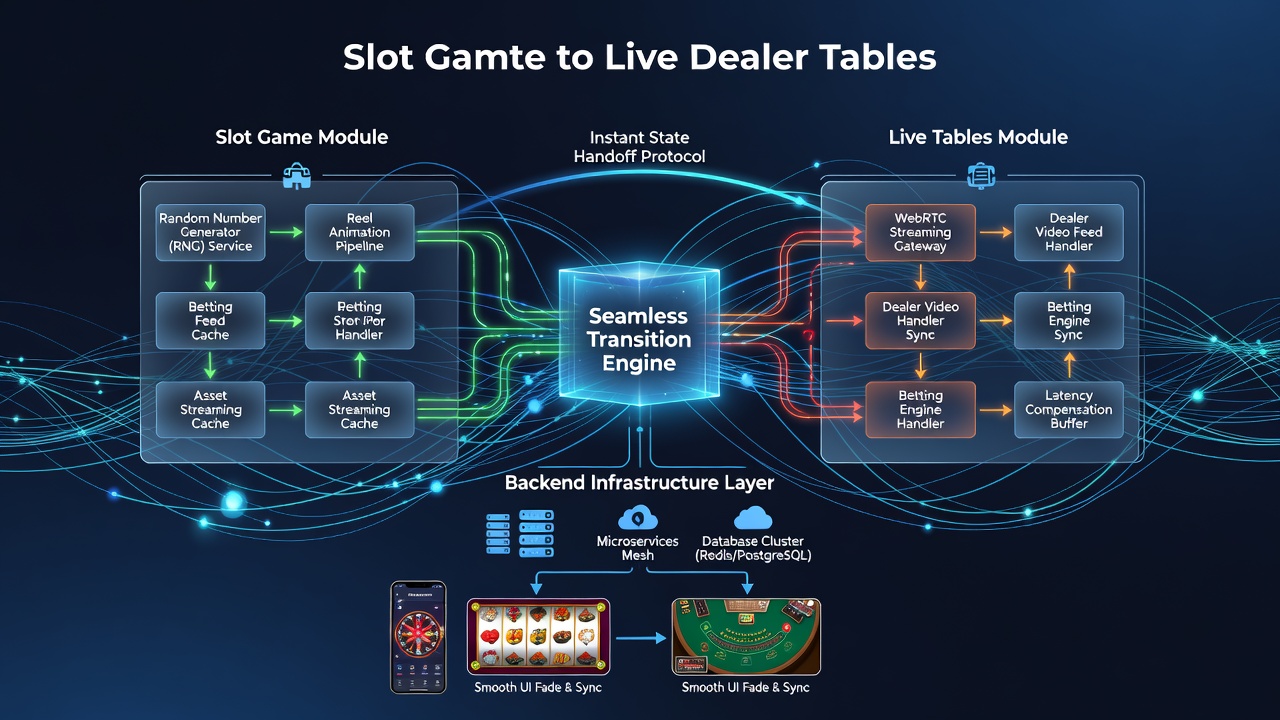
Audio management services mute or crossfade soundtracks during switches to prevent abrupt cuts. Video encoding standards like WebRTC handle peer connections for dealer interactions while fallback mechanisms ensure compatibility across older devices. In July 2026, platform operators reported wider adoption of edge computing nodes that cache live table streams closer to regional users, further shortening handoff times.
Security and Compliance Controls
Encryption covers all data in transit between services, and role-based access limits exposure of sensitive player information. Audit logging captures every state change during transitions so regulators can reconstruct sequences if disputes arise. External links to standards bodies such as the Nevada Gaming Control Board provide technical specifications that many international operators reference when designing these hybrid flows.
Additional safeguards include rate limiting on transition requests and anomaly detection models that flag unusual patterns across game types. These controls integrate with broader platform monitoring dashboards that aggregate metrics from both slot and live environments.
Client-Side Rendering and User Flow
Front-end frameworks such as React Native or Flutter deliver consistent interfaces across iOS and Android while supporting native modules for video playback. Transition animations use hardware-accelerated rendering so that reel stops blend into card shuffles without visible loading screens. Accessibility features remain active throughout, preserving screen reader support and adjustable contrast settings.
Players encounter progressive loading indicators only when additional assets like new table layouts require download. Cached resources from prior sessions accelerate subsequent switches, and background prefetching anticipates common movement patterns based on historical data.
Conclusion
Software designs that unify slot and live table experiences continue to evolve through incremental improvements in service communication, state management, and delivery networks. Observers note that platforms adopting these patterns handle higher concurrent user loads while maintaining regulatory traceability across jurisdictions. Data from industry reports, including those referenced by the Ontario Lottery and Gaming Corporation, indicate steady growth in hybrid game usage as architectures mature.