Inside the Code: Encryption Standards and RNG Protocols Guiding Secure Reward Flows Across Digital Gaming Formats
Paul Bennett · Jun 2, 2026
Inside the Code: Encryption Standards and RNG Protocols Guiding Secure Reward Flows Across Digital Gaming Formats
Digital gaming platforms depend on layered technical frameworks to move rewards, bonuses, and payouts without exposing player data or introducing predictable outcomes, and encryption standards form the first line of defense for those transactions. Standards such as AES-256 encrypt account balances and reward ledgers while they travel between servers and client devices, whereas TLS 1.3 handles the session keys that authenticate each connection during deposit or withdrawal events. Researchers at the National Institute of Standards and Technology have documented how these protocols combine to create end-to-end tunnels that keep reward metadata unreadable to intermediaries, and operators integrate them into payment gateways so that bonus credits appear only after cryptographic verification succeeds.
Encryption Layers That Protect Reward Movement
Modern platforms apply encryption at multiple points along the reward pipeline, beginning with the moment a player triggers a free-spin allocation or cashback credit. Data packets containing reward identifiers pass through AES encryption before they reach the central ledger, and each packet receives a fresh initialization vector so that repeated bonus claims do not produce identical ciphertext patterns. Observers note that this approach prevents replay attacks in which intercepted packets could be reused to duplicate rewards, while session-layer TLS ensures the server and device agree on the encryption parameters before any reward data transfers. Studies from academic cryptography groups show that shortening key rotation intervals to under sixty seconds further reduces the window during which a compromised key could affect ongoing bonus distributions.
RNG Protocols That Determine Fair Reward Allocation
Random number generation sits at the core of every slot outcome, table draw, and promotional prize draw, and certified RNG implementations must meet statistical tests before regulators approve a platform for real-money play. Independent laboratories run suites that include dieharder and NIST statistical test batteries on the generator output, confirming that sequences remain unpredictable and uniformly distributed across millions of simulated spins. Those who have examined certified systems report that hardware-based entropy sources, such as thermal noise or quantum fluctuations, feed the algorithms so that software-only pseudorandom sequences cannot be reverse-engineered from observed bonus hits. When a reward flow involves a progressive jackpot or tournament prize pool, the RNG call occurs inside a hardware security module that signs the result before the encrypted outcome returns to the player interface.
Integration of Encryption and RNG in Bonus Mechanics
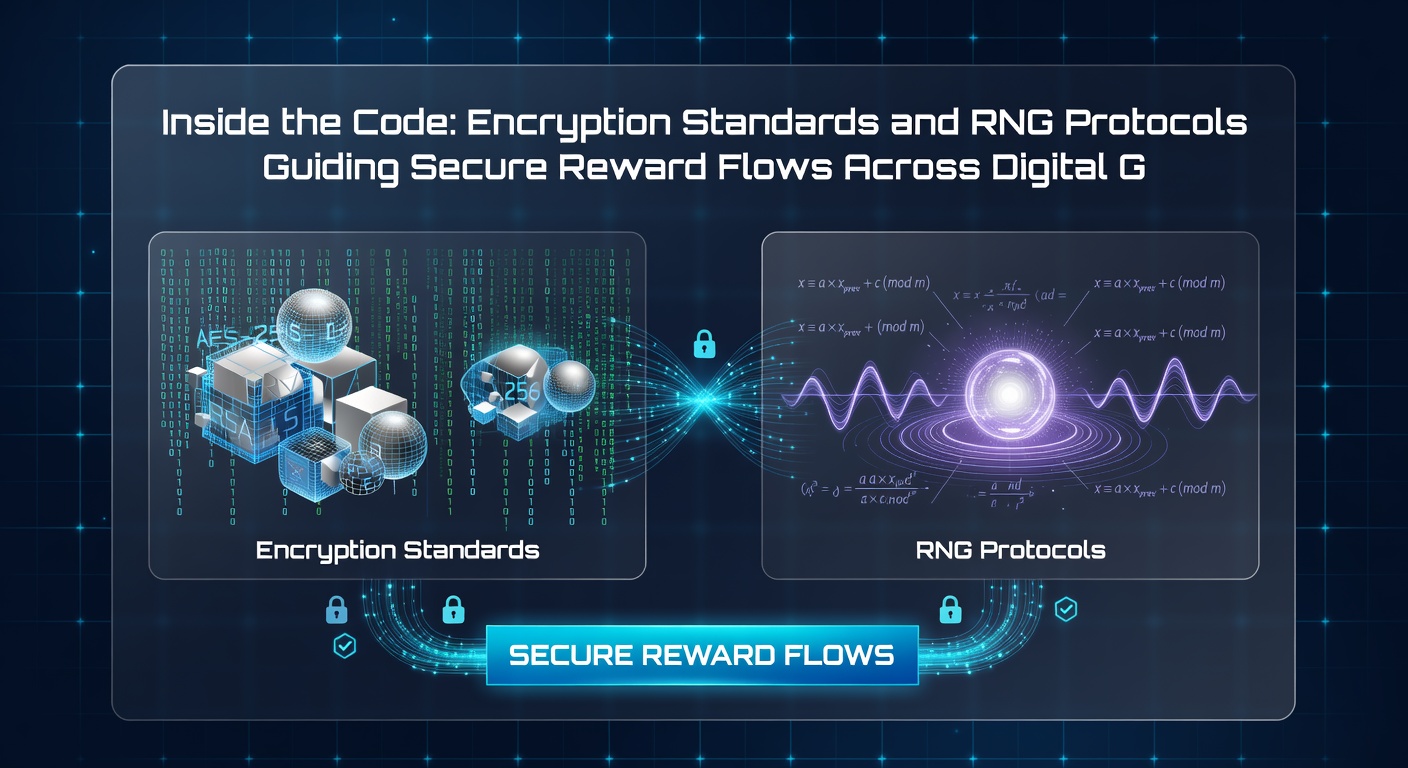
Operators link encryption and RNG functions so that a generated reward value moves through the same protected channel that handles ordinary balance updates. A typical flow begins when the RNG produces a prize multiplier or free-spin count, after which the value receives an AES-encrypted wrapper tagged with a timestamp and player identifier. The wrapped data packet travels across TLS to the wallet service, where another verification step confirms the RNG signature before the credit posts. Gaming associations in North America and Europe have published interoperability guidelines that require this signature to remain valid for at least thirty days, allowing dispute-resolution teams to audit any questioned reward without decrypting historical ledgers in bulk. Platforms that adopted these guidelines ahead of June 2026 reported smoother certification renewals because audit logs already contained the required cryptographic proofs.
Regional Standards and Certification Bodies
Certification requirements differ by jurisdiction yet converge on common technical baselines. The Australian Communications and Media Authority references ISO/IEC 19790 for cryptographic module validation when operators seek remote-gaming approvals, while Canadian provincial regulators accept test results from labs accredited under the same ISO framework. European bodies emphasize additional entropy-source audits for RNGs used in skill-based bonus rounds. Data from industry reports indicate that platforms maintaining simultaneous certification across these regions experience fewer service interruptions when reward engines update, because the underlying encryption and randomness modules already satisfy the strictest common criteria.
Case Examples of Secure Reward Delivery
One European operator introduced a cross-format loyalty system in which daily free spins and cashback percentages flow through a unified RNG-encrypted pipeline. Audit records show that each reward claim generated a unique nonce inside the hardware module, and the resulting token passed through AES encryption before reaching the mobile app. A separate North American casino group documented how its progressive jackpot network signs every contribution and payout with the same RNG seed sequence, allowing regulators to verify that no external party altered the pool total between draws. Observers tracking these deployments note that the dual-layer approach reduced the average time required to resolve disputed bonus credits from several days to under four hours.
Future Protocol Updates Scheduled for 2026
Standards organizations have scheduled reviews of post-quantum encryption candidates for gaming applications during the first half of 2026, with migration timelines extending into subsequent years. RNG testing frameworks are also expanding to include machine-learning-based predictability checks that supplement existing statistical suites. Operators who have already piloted hybrid classical and post-quantum key exchanges report that reward latency remains within acceptable thresholds, because the additional cryptographic operations occur only during session establishment rather than per-spin. Those monitoring the transition emphasize that backward-compatible modes will remain available so that older client software continues to receive encrypted reward data without interruption.
Conclusion
Encryption standards and RNG protocols together create the technical substrate that lets digital gaming platforms distribute rewards at scale while preserving auditability and fairness. Platforms that align their implementations with published certification requirements from multiple regions maintain continuous service even as standards evolve. The same cryptographic bindings that protect ordinary transactions also secure the more complex flows associated with tournaments, loyalty tiers, and progressive pools, ensuring that every credit reaches the intended account only after verified randomness and encryption checks complete.