Decoding Bonus Eligibility Across Software Layers in Cross-Platform Live Gaming Environments
Vera Becker · Aug 4, 2026
Decoding Bonus Eligibility Across Software Layers in Cross-Platform Live Gaming Environments
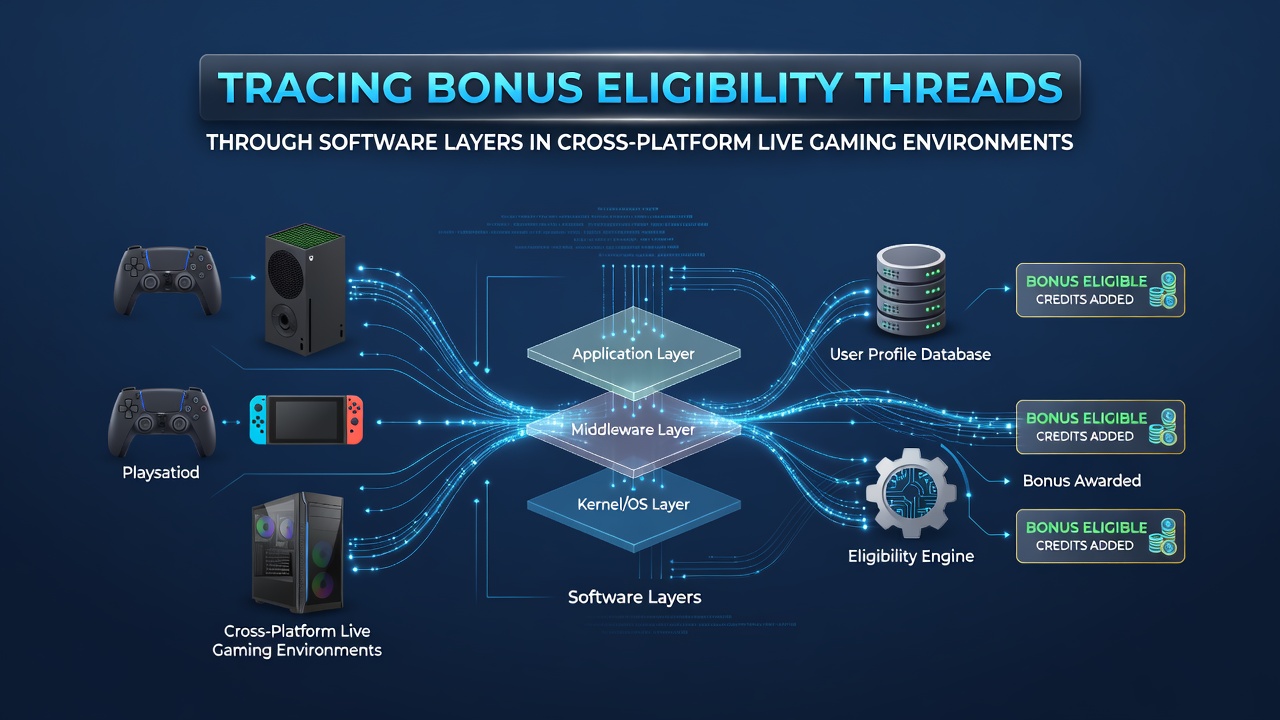
Cross-platform live gaming environments rely on interconnected software layers to manage bonus eligibility, and these systems must process player data across mobile applications, desktop clients, and live dealer interfaces simultaneously. Developers structure the architecture with distinct tiers that include presentation layers, business logic modules, and backend data services, each handling specific parts of the eligibility verification process. When a player initiates a session, the frontend layer captures initial account details and passes them through APIs to the core engine, which then queries eligibility rules stored in centralized databases.
Core Architecture Components
Multiple tiers operate in sequence to trace bonus qualification threads without introducing latency during live dealer interactions. The presentation layer handles user inputs and renders real-time updates, while the application layer evaluates conditions such as deposit history, game participation metrics, and time-based criteria. Backend services maintain persistent records that sync across platforms, ensuring consistency when players switch devices mid-session. Observers note that synchronization protocols often use event-driven messaging to update eligibility status instantly across all connected endpoints.
Integration points between these layers incorporate validation checks that reference external compliance databases, and these checks occur before any bonus activation reaches the live gaming stream. Systems track eligibility flags through unique session identifiers that persist through each software boundary, allowing auditors to reconstruct the full decision path after the fact. Research from industry groups indicates that such threading mechanisms reduce discrepancies in multi-device environments by maintaining immutable logs at every transition point.
Cross-Platform Synchronization Challenges
Live gaming platforms must reconcile data streams from disparate operating systems and network conditions, which creates specific demands on eligibility tracking modules. When players move from a mobile app to a desktop interface during a live table session, the system propagates eligibility threads via secure token exchanges that carry accumulated qualifiers forward. Data from the New Jersey Division of Gaming Enforcement shows that platforms using unified session management report fewer interruptions in bonus delivery compared to fragmented approaches.
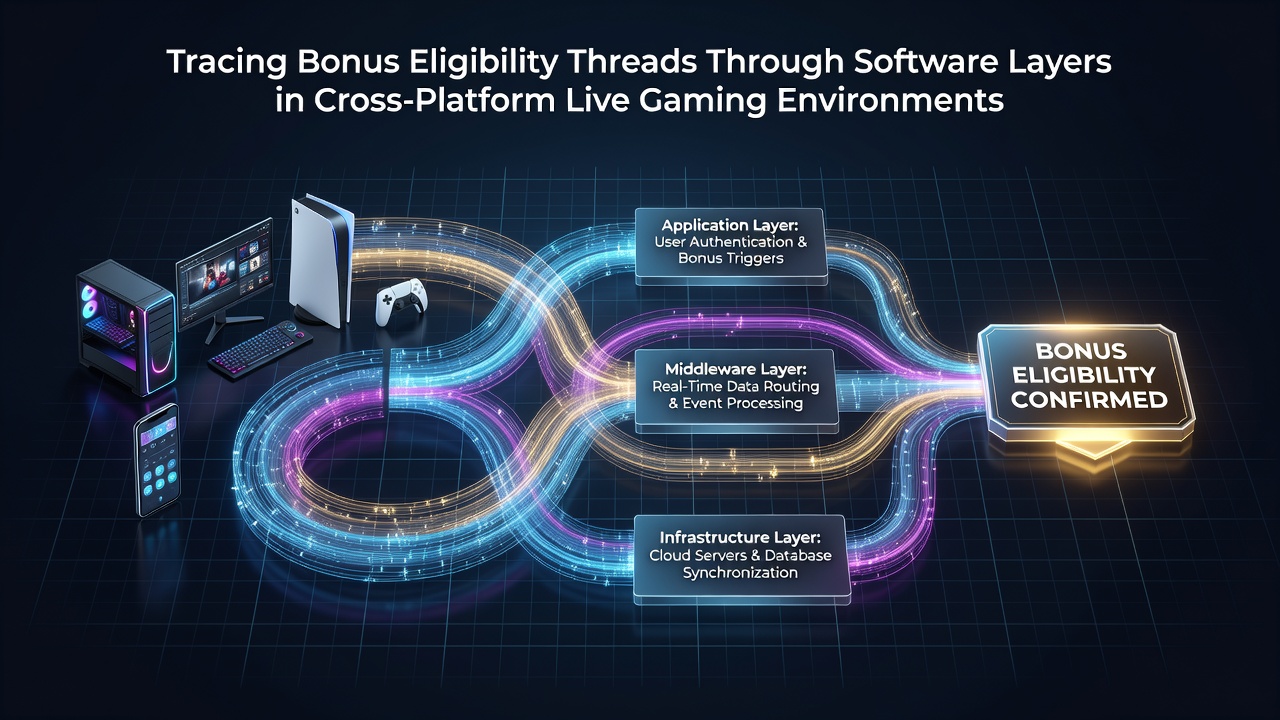
Network latency and device-specific rendering differences can affect how quickly eligibility updates appear on screen, yet robust middleware layers buffer these variations to keep the live experience uninterrupted. Engineers implement retry mechanisms and state reconciliation routines that verify bonus status against the authoritative backend record before confirming any reward. Studies from the International Association of Gaming Advisors highlight that effective threading reduces processing overhead when multiple platforms access shared bonus pools.
Technical Tracing Mechanisms
Bonus eligibility threads move through logging frameworks that timestamp each decision at the layer level, creating traceable sequences for regulatory review and internal audits. These logs capture rule evaluations, data source queries, and final determinations in structured formats that support rapid retrieval. As of August 2026, updated interoperability standards from global gaming technology bodies have encouraged wider adoption of standardized event schemas, which simplify cross-layer tracing in mixed live and digital environments.
Developers embed diagnostic hooks within the business logic tier that expose intermediate states without exposing sensitive player information, and these hooks enable real-time monitoring tools to flag anomalies before they reach the player interface. Thread management often incorporates cryptographic hashing to prevent tampering during transit between layers, ensuring the integrity of eligibility decisions throughout the session lifecycle. Reports from the Gaming Standards Association detail how such measures support scalable operations across expanding live gaming networks.
Conclusion
Effective tracing of bonus eligibility through software layers depends on coordinated design across presentation, application, and data tiers in cross-platform live gaming setups. The mechanisms described allow platforms to maintain accurate, synchronized records while supporting seamless player movement between devices and interfaces. Continued refinement of these threading processes aligns with evolving technical standards that emphasize reliability and auditability in live environments.